Wednesday, November 14, 2018

Vote in Your FSA County Committee Election!

Posted by Dana Rogge, Farm Service Agency in Farming

Nov 12, 2018 
Let us fill you in on a little secret. We love our customers! We value local input from farmers, ranchers, and foresters, like you. One way we facilitate the connection between the producers we serve and the programs we administer is through the USDA Farm Service Agency locally-elected county committees.
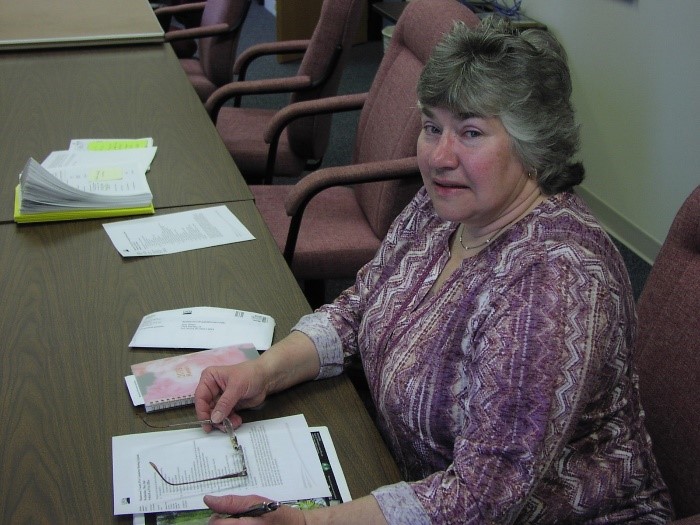
“It is so important to have farmers willing to serve on their county committees to share their experiences and offer different perspectives so committees can make informed decisions,” said Terri Wilfert, a member of the Manitowoc County, Wisconsin, Farm Service Agency County Committee. 
Terri was elected to her committee in 2010 and currently serves as chairperson.
Get Your Vote On
For many farmers, it’s now time to make your selection. Each year, the Farm Service Agency accepts nominations for a certain local administrative area. This area rotates each year, so not every producer will receive a ballot. If your area happens to be up for election this year, then you will receive a ballot.
The week of November 5, all eligible voters were mailed a ballot for their local county committee. If you were expecting to receive a ballot, and did not, don’t fret! Contact your local Farm Service Agency and we’ll ensure you get a replacement ballot if necessary.
You must participate or cooperate in a Farm Service Agency program to be eligible to vote. If you are not of legal voting age but supervise and conduct the farming operation of an entire farm, you may also be eligible to vote. View our fact sheet on voter eligibility.
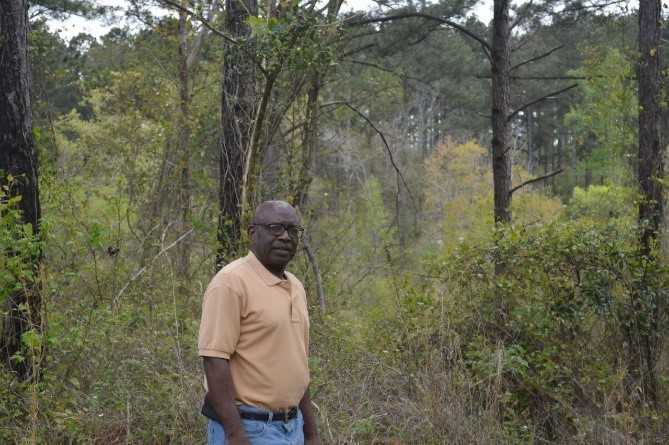
“County committees are important because they help get information out to their peers about what is going on,” said Willie Scott Smith, a member of the Alabama’s Greene County Farm Service Agency Committee.
Final Countdown
Time is counting down for you to cast your ballots! Ballots must be dropped off at your local Farm Service Agency office or postmarked by Dec. 3, 2018. 
We’re counting on you! Vote today for the candidate you’d like to see represent your area on your local Farm Service Agency county committee.
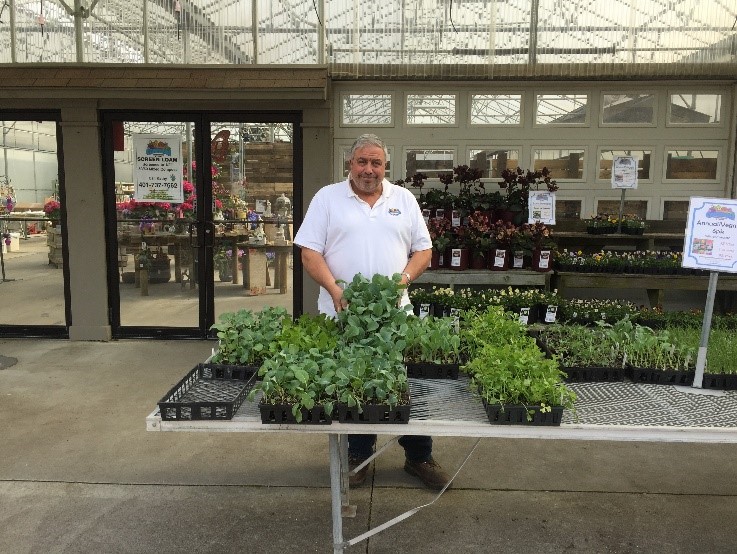
 “County committee members assist the Farm Service Agency county office with important program decisions that affect the farmers,” said Vincent Confreda, member of the Kent County, Rhode Island, Farm Service Agency Committee.
“County committee members assist the Farm Service Agency county office with important program decisions that affect the farmers,” said Vincent Confreda, member of the Kent County, Rhode Island, Farm Service Agency Committee.
Your Turn to Serve
Don’t forget next summer we’ll be looking for more candidates to serve on our committees. Read what these current county committee members had to say about their experiences. Learn more.
Dana Rogge is a public affairs specialist serving USDA's Farm Service Agency, Natural Resources Conservation Service, and Risk Management Agency. She can be served at dana.rogge@mo.usda.gov

Thursday, November 1, 2018

Ark. 2018 Urban Homesteading Conference Nov. 3

KEYHOLE GARDEN - Master Gardeners Ruth Landers and Valerie Smith toss old newspaper into the bottom of their "keyhole garden" demonstration at the St. Joseph Community Garden during the 2017 Arkansas Urban Homesteading Conference at the St. Joseph Center of Arkansas.
(Image courtesy Britt Talent)


By Sarah Cato
U of A System Division of Agriculture 

Fast facts: 
·      2018 Urban Homesteading Conference will be held Nov. 3 
·      Conference will cover agricultural topics from beekeeping to food preservation 
·      For registration and info: http://www.arkansashomesteader.com/

RISON, Ark. – What began as a little dabbling at home has turned into the Arkansas Homesteading Conference – a series of meetings that provide information and demonstrations on sustainable living techniques. 

The next event, the Arkansas Urban Homesteading Conference, returns to the St. Joseph Center of Arkansas in North Little Rock on Saturday, Nov. 3. It’s presented by the Arkansas Homesteaders, the University of Arkansas System Division of Agriculture and the St. Joseph Center.  

The conference will cover gardening, food preservation, alternative energy and other concepts that are backyard-friendly. 

The Arkansas Homesteading Conference was co-founded by Britt and Karen Talent of Rison. The conference is in its fifth year, having held events at Rison, Mountain View, Harrison and North Little Rock.

"This conference is a little different from our typical homesteading conferences in that we focus more on concepts that can practiced in someone's backyard," Britt Talent said. "There are a lot of ways people can enjoy growing their own food in a tiny backyard or even on the balcony of an apartment, and a lot of these concepts can be scaled up for those who have more space."

Talent said homesteading is “something we’ve dabbled in. I had a friend suggest that we put on this conference through the newspaper, so we did.” Talent is editor and publisher of the Cleveland County Herald in Rison.  

That first conference held in their hometown of Rison drew about 150 people from 18 counties across Arkansas. “We were encouraged to hold another and, as they say, the rest is history.”  Since then, people from a dozen states have attended the conferences to learn more about achieving a sustainable lifestyle. 

Division of Agriculture Extension Horticulture Specialist Janet Carson will cover container and raised bed gardening and Farm Hands Companions homesteader Gary “Pa Mac” McWilliams will discuss “no cost” gardening. 

Other presentations include: 

·      Fermentation with Margie Raimondo of Southern Table Restaurant in Little Rock 
·      Dehydrating foods with Michelle Carter, Bradley County extension agent for the Division of Agriculture and an expert in food preservation/
·      Home berry production with Amanda McWhirt, extension horticulture specialist for the Division of Agriculture. 
·      Solar energy applications for the home with Frank Kelly from Solar Source Consulting in North Little Rock 
·      Raised bed growing trials with Les Walz, staff chair for the Cleveland County Extension office 
·      Composting methods with Ryan and Rosemary Sinclair of Geeky Goose Farm 
·      Building an air pruning raised bed with Arkansas Homesteading Conference organizer Britt Talent 
·      Natural beekeeping with Lori Bird of Birds & Bees Honey 
·      Growing in high tunnels with Bobby Burrows and Travis DeLongchamp, farmers with St. Joseph.

The conference will consist of three tracks with four sessions in each track and lunch will be provided with registration. The registration fees are $35 for adults, $11.25 for youth ages 7-12 and free for ages 6 and under. 

To register or learn more about the Arkansas Urban Homesteading conference, visit www.arkansashomesteader.com or contact Britt Talent at (870) 325-6412.

This will be the second year the conference has been held at the 63-acre urban farming center located in North Little Rock next to Camp Robinson.

Originally constructed in 1908, the St. Joseph Home served as an orphanage until 1978. It continued to operate as a daycare and kindergarten until 1997. Since then, the non-profit St. Joseph Center of Arkansas has taken on the challenge of preserving the property by developing it into a working farm complete with gardens, cattle, sheep, goats, laying hens, bees and a farm stand. 


Monday, October 29, 2018

Pasture walk Nov. 2 at Batdorf Dairy near Niangua, Mo.

MOUNTAIN GROVE, Mo. - University of Missouri Extension will host a pasture walk starting at 11 a.m. on Friday, Nov. 2 at the Andrew Batdorf family farm, 2216 State Hwy M, Niangua.
"The 2018 growing season will soon be over, but we have one more pasture walk scheduled for this fall," said Ted Probert, dairy specialist with University of Missouri Extension.
The Batdorfs have been busy this fall making new seedings designed to fill immediate as well as future grazing needs.

"We will have the opportunity to inspect winter annual pastures consisting of a variety of different forage species. We'll be able to compare plantings made with tillage and through no-till," said Probert.
Andrew Batdorf is experimenting with no tilling wheat into established fescue to thicken and enhance the quality of these pastures.

"We will be able to see how this is working," said Probert.

A new alfalfa/orchardgrass stand will also be available for viewing. A final project that will be of interest to the group is the silvopasture currently under development.

In addition to viewing pastures, there will be time for questions or discussion about organic or grass only production.

For more information, contact either of these MU Extension dairy specialists in southwest Missouri: Ted Probert in Wright County either at (417) 547-7500 or by email at probertt@missouri.edu, or Reagan Bluel in Barry County at (417) 847-3161 or by email at BluelRJ@missouri.edu.

Monday, October 15, 2018

Neb. sheep & goat producers meet Oct. 27


The 2018 Nebraska Sheep and Goat Producers Annual Conference will be held Saturday, October 27, at the UNL Animal Science Building, 3865 Fair St, Lincoln, Neb.  68583-0908. The conference is open to members and nonmembers. Please see registration application at the bottom of this article.

AGENDA

9:30 am Registration — Animal Science Building

10:00 am Welcome, Dr. Clint Krehbiel, Department Head of Animal Science

10:15 am Tour the New Vet Diagnostic Lab, Clayton Kelling, Director School of Veterinary Medicine. The UNL Vet Diagnostic Lab is a state of the art facility that was opened in 2017 to serve Nebraska livestock owners and veterinarians it is also providing learning experiences for students studying veterinary medicine.


11:30 am Return to Animal Science

11:45 Research Update: Stress Biology research with sheep, Dr. Dustin Yates. Dr. Dustin Yates joined the University in 2015. The focus of his research is on how maternal and environmental stress affects the efficiency of grow and carcass quality in livestock and how these aspects are related to metabolic disorders in humans. 

12:00 Lunch –  With Speakers  Dr. Clint Krehbiel Animal Science

1:15 pm Research Update: Sheep Genetics National Sheep Improvement Program, Dr. Ron Lewis. Dr. Ron Lewis is a professor of Animal Science and joined UNL in 2014 with a focus on Animal Breeding and Genomics.  Dr. Lewis serves as technical advisor to the National Sheep Improvement Program is currently the vice-Chairman of the genetic stakeholders Committee for ASI.  He teaches undergraduate and graduate courses in Animal Breeding and Genetics.

1:45 pm Making the most out of a cool season pasture, Dr. John Guretzky. Dr. John Guretzky is an Associate Professor of Agronomy.  His research focuses on the biodiversity in grasslands as well as the integration of forages in crop and livestock systems.

2:15 pm Live Animal Evaluation Goat & Sheep, Brad Anderson
Brad Anderson serves as livestock supply manager for Mountain States Rosen Lamb.  He is active in procurement and customer and producer relations.  He also represents the American Lamb Board and various events in the midwest.

3:30 pm Carcass Evaluation and value, Dr. Dennis Burson and Brad Anderson. Lamb and goat carcass fabrication demonstration, Dr. Dennis Burson. Dr. Dennis Burson is professor Meat Extension and Food Safety Specialist for the University of Nebraska a position he has held for 34 years.  He teaches courses in meat evaluation and grading as well as HACCP and Food Safety. He works with meat processors across the state through his extension programs.

4:45 pm American Lamb Board update, Brad Anderson, Mountain States Lamb. 

5:00 pm Annual Meeting

6:00 pm Dinner

For more information contact Randy Saner, Extension Educator, Lincoln-Logan-McPherson Counties, 348 W State Farm Road, North Platte, Neb. 69101. http://llm.unl.eduOffice 308-532-2683.  E-mail:  randy.saner@unl.edu


Tuesday, October 9, 2018

Goat workshop Oct. 18 in Frankfort, Ky.


Sustainable Agriculture Workshop
October 18, 2018

Harold R. Benson Research & Demonstration Farm


1525 MillLane
FrankfortKentucky

 (502)597-6325


Directions: FroI-64 Exit 53, take U127 Souttoward Lawrenceburg to th4thstoplight, turn left onto MillsLane, thKSFarm i1½ mileothright.

Goats


10:00 - 10:10 am
Welcome and Announcements 
Dr. Marion Simon, Kentucky State University
10:10 – 10:50 am
Goat Production Option
Confinement Management of Meat Goats
Frank Pinkerton
11:00 – 11:50 am
Feed-lotting Meat Goats
Frank Pinkerton
10:10 – 11:50 am
Guard Animal Option
Health Care and Concerns for Guard Animals
Dr. Jessie Lay, Kentucky State University
Ms. Emily Clement, Kentucky State University
12:00 – 1:00 pm
Lunch
Kentucky State University Farm Crew
1:00 – 1:50 pm
Meat Goat Quality from a Packer Perspective
Donny Brewer, Brewer Livestock
2:00 – 2:50 pm
Research Update
Dr. Ken Andries, Kentucky State University
3:00 – 3:30 pm
Buck Kids Offered for Sale
From Kentucky State University
    
PLEASE NOTE: The next Third Thursday Thing Program will be November 15, 2018 and be will on AgrAbility and Nutrition and Fitness for the Active Farmer.
Educational programs of Kentucky Cooperative Extension serve all people regardless of economic or social status and will not discriminate on the basis of race, color, ethnic origin, national origin, creed, religion, political belief, sex, sexual orientation, gender identity, gender expression, pregnancy, marital status, genetic information, age, veteran status, or physical or mental disability. Kentucky State University, University of Kentucky, U.S. Department of Agriculture, and Kentucky Counties, Cooperating. 2017

Thursday, September 13, 2018

USDA Prepared to Respond to Hurricane Florence

WASHINGTON, D.C. – The U.S. Department of Agriculture (USDA) reminds rural communities, farmers and ranchers, families and small businesses potentially impacted by Hurricane Florence of programs to provide assistance in the wake of disasters. USDA staff in the regional, State and county offices stand ready and eager to help. Additionally, USDA’s Operations Center will function around the clock.

“Our farmers and ranchers take financial risks every year to help feed and clothe the U.S. and the world, and a hurricane makes their situations even more perilous,” U.S. Secretary of Agriculture Sonny Perdue said. “At USDA, it’s our job to be there for them when they need help. All of our relevant agencies are ready to assist when natural disasters strike.”

USDA has important roles in both response to hurricanes and recovery efforts. USDA also is staffing the Regional Response Coordination Center in the Federal Emergency Management Agency’s (FEMA) Region IV, which covers eight states including North Carolina, South Carolina, and Georgia. USDA is providing 24-hour staffing to the FEMA National Response Coordination Center, and has personnel supporting the North Carolina and South Carolina State Emergency Operations Centers.
USDA also is supporting FEMA Region II Regional Response Coordination Center in New Jersey to assist response efforts for Tropical Storm Isaac and Hurricane Florence. Additionally, personnel from the U.S. Forest Service and USDA Office of the Inspector General are pre-staging in Charlotte, North Carolina to assist with public safety and security efforts.

USDA recently launched a disaster assistance discovery tool through its new website Farmers.gov that walks producers through five questions to help them identify personalized results of which USDA disaster assistance programs can help them recover after a natural disaster.

In a continuing effort to serve the public, USDA also partnered with FEMA and other disaster-focused organizations and created the Disaster Resource Center website, located at www.usda.gov/topics/disaster. This central source of information utilizes a searchable knowledgebase of disaster-related resources powered by agents with subject matter expertise. The Disaster Resource Center website and web tool now provide an easy access point to find USDA disaster information and assistance.
USDA also encourages residents and small businesses in impact zones to contact USDA offices which meet their individual needs.

Food Safety and Food Assistance

Severe weather forecasts often present the possibility of power outages that could compromise the safety of stored food. The USDA Food Safety and Inspection Service (FSIS) recommends consumers take necessary steps before, during, and after a power outage to reduce food waste and minimize the risk of foodborne illness. FSIS offers tips for keeping frozen and refrigerated food safe and A Consumer's Guide to Food Safety: Severe Storms and Hurricanes brochure that can be downloaded and printed for reference at home. Owners of meat and poultry producing businesses who have questions or concerns may contact the FSIS Small Plant Help Desk by phone at 1-877-FSIS-HELP (1-877-374-7435), by email at infosource@fsis.usda.gov, or 24/7 online at: www.fsis.usda.gov/wps/portal/fsis/topics/regulatory-compliance/svsp/sphelpdesk.

The USDA Food and Nutrition Service (FNS) coordinates with state, local and voluntary organizations to provide food for shelters and other mass feeding sites. Under certain circumstances, states also may request to operate a disaster household distribution program to distribute USDA Foods directly to households in need. As disaster response moves into the recovery phase, FNS may approve a state's request to implement a Disaster Supplemental Nutrition Assistance Program (SNAP) when the President declares a major disaster for individual assistance under the Stafford Act in areas affected by a disaster. State agencies also may request a number of disaster-related waivers to help provide temporary assistance to impacted households already receiving SNAP benefits at the time of the disaster, and to provide flexibilities in administering school meals, the Special Supplemental Nutrition Program for Women, Infants, and Children, and other programs. Resources for disaster feeding partners as well as available FNS disaster nutrition assistance can be found on the FNS Disaster Assistance website.

Crop and Livestock Loss

The USDA Farm Service Agency (FSA) administers many safety-net programs to help producers recover from eligible losses, including the Livestock Indemnity Program, the Emergency Assistance for Livestock, Honeybees, and Farm-Raised Fish ProgramEmergency Forest Restoration Program (PDF, 257 KB) and the Tree Assistance Program. The FSA Emergency Conservation Program provides funding and technical assistance for farmers and ranchers to rehabilitate farmland damaged by natural disasters. Producers located in counties that receive a primary or contiguous disaster designation are eligible for low-interest emergency loans to help them recover from production and physical losses. Compensation also is available to producers who purchased coverage through the Noninsured Crop Disaster Assistance Program, which protects non-insurable crops against natural disasters that result in lower yields, crop losses or prevented planting. USDA encourages farmers and ranchers to contact their local FSA office to learn what documents can help the local office expedite assistance, such as farm records, receipts and pictures of damages or losses.

Producers with coverage through the federal crop insurance program administered by the Risk Management Agency should contact their crop insurance agent. Those who purchased crop insurance will be paid for covered losses. Producers should report crop damage within 72 hours of damage discovery and follow up in writing within 15 days.

Community Recovery Resources

For declared natural disasters that lead to imminent threats to life and property, the USDA Natural Resources Conservation Service (NRCS) can assist local government sponsors with the cost of implementing recovery efforts like debris removal and streambank stabilization to address natural resource concerns and hazards through the Emergency Watershed Protection Program. NRCS had made available nearly $2 million in advance funding under the Emergency Watershed Protection program to help local communities immediately begin relieving imminent hazards to life and property caused by floods and is coordinating with state partners to complete damage assessments in preparation for sponsor assistance requests. NRCS also can help producers with damaged agricultural lands caused by natural disasters, such as floods.

The NRCS Environmental Quality Incentives Program (EQIP) provides financial assistance to repair and prevent excessive soil erosion that can result from high rainfall events and flooding. Conservation practices supported through EQIP protect the land and aid in recovery, can build the natural resource base, and might help mitigate loss in future events.

USDA National Institute of Food and Agriculture provides support for disaster education through the Extension Disaster Education Network (EDEN). EDEN is a collaborative multi-state effort with land-grant universities and Cooperative Extension Services across the country, using research-based education and resources to improve the delivery of services to citizens affected by disasters. EDEN's goal is to improve the nation's ability to mitigate, prepare for, prevent, respond to and recover from disasters. EDEN equips county-based Extension educators to share research-based resources in local disaster management and recovery efforts. The EDEN website offers a searchable database of Extension professionals, resources, member universities and disaster agency websites, education materials to help people deal with a wide range of hazards, and food and agricultural defense educational resources.

Many of USDA Rural Development programs can help provide financial relief to rural communities hit by natural disasters by offering low-interest loans to rural community facilities, rural businesses and cooperatives and to rural utilities. More information can be found on the Rural Development website, located at www.rd.usda.gov.

For complete details and eligibility requirements regarding USDA's disaster assistance programs, contact a local USDA Service Center. More information about USDA disaster assistance, as well as other disaster resources, is available on the USDA Disaster Resource Center website, located at www.usda.gov/topics/disaster.