Friday, July 8, 2022

2 Free Webinars on Farm Tax Preparation and Resources


Filing taxes for an agricultural operation can be challenging, and many producers may not have the funds to hire accountants or tax professionals to assist. USDA’s Farm Service Agency (FSA) and the National Farm Income Tax Extension Committee are offering two free webinars:

  • Tuesday, July 12, 2 p.m. Eastern: An Introduction to Ag Taxes: What New Farmers Should Know. Learn more about who is considered a farmer for IRS tax purposes and how to choose a tax professional. Register here.
  • Monday, August 15, 2 p.m. Eastern: Using the Tax Calculator. The Farm Tax Estimator Tool is an interactive spreadsheet that producers can download to estimate tax liability. Register here.

Find other resources at farmers.gov/taxes.

Friday, July 1, 2022

Information on FDA Guidance Ending Over-the-Counter Antibiotics


Over-the-Counter Antibiotics will require Veterinary Oversight (Rx) beginning in June 2023 – Start Planning Now!


In June of 2021, the U.S. Food and Drug Administration (FDA) has announced that all medically important antimicrobials will move from over-the-counter (OTC) to prescription (Rx) only as of June 2023. The Center for Veterinary Medicine guidance for industry #263 (GFI 263) outlines the process.

This means that the injectable, oral, intramammary, and topical forms of antibiotics will require a prescription from a licensed veterinarian.


What species are included?

This applies to all companion and farm animal species.


When do these new changes become effective?

Beginning in June of 2023, or sooner, depending on when the manufacturer changes their labeling.


What do this mean to you and your livestock operation?

By June of 2023, all medically important antibiotics currently available at most feed or farm supply stores will now require veterinary oversight (written Rx) to be used in animals, even if the animals are not intended for food production.


Examples of affected antibiotics include injectable penicillin and oxytetracycline.

In addition, some retail suppliers who were able to sell these drugs/products in the past may no longer sell them after June of 2023.


This means in order to continue using medically important antimicrobials, you will need to establish a veterinary-client-patient relationship (VCPR). Consult your veterinarian for more information.


What is a veterinarian-client-patient-relationship?

A veterinarian-client-patient-relationship (VCPR) is defined by the American Veterinary Medical Association as the basis for interaction among veterinarians, their clients, and their patients and is critical to the health of your animal(s). The practical explanation is that it is a formal relationship that you have with a veterinarian who serves as your primary contact for all veterinary services and is familiar with you, your livestock/animals, and your farm operation. This veterinarian is referred to as your Veterinarian of Record (VoR), and both the VoR and the client should sign a form to document this relationship.


VCPR REQUIREMENTS (STATE & FEDERAL)


How will this work?

That means producers will need to have veterinarian-client-patient-relationship (VCPR), in order to get affected antibiotics like penicillin, oxytetracycline and erythromycin.

The new guidance does not require producers to purchase antibiotics through their veterinarian. Producers can use online pharmacies as long as they have a prescription.

The guidance does not affect antiparasitic drugs.


Helpful Resources:


Wednesday, June 1, 2022

Report highlights the social value of saleyards


This report is from Australia, but the same holds true for local stockyards across America too.

IT has long been understood that cattle and sheep sales are more than places to simply transact livestock, serving also as a regular gathering point and valuable social outlet for the livestock sector. 

However, little research has been conducted to quantify just how valuable saleyards are to the wellbeing of rural communities and the people that attend physical livestock sales.

A new report has now been released seeking to fill that gap, drawing on online surveys of 152 people and in-person interviews with 105 people at six saleyards across five Australian States.

Key findings of the “Social Value of Saleyards Research Report” released on Monday include:

– 96 percent of people identified that when they’re not buying and selling, they are socialising – “catching up with their mates and having a laugh”

– Stakeholders undertake information sharing, networking and market research and learning from one another

– Not being able to attend saleyards led to an increase in loneliness and social isolation for stakeholders

– Saleyard communities provide a ‘hub’ to deliver a range of services to a diverse group of people.

The Social Value of Saleyards Research Report is the result of a research project conducted by Blue Wren Connections and  commissioned by the Australian Livestock Markets Association, the national industry body for saleyard owners and operators in Australia.

Despite a widespread understanding that saleyards bring a vibrancy and energy to communities and sale days are a significant contributor to reducing social isolation, building community identity and promoting well-being in the population, there is a clear absence of research into the social value of sale days at livestock selling centres, the study noted.

ALMA identified that it was important to capture the data to reflect and give evidence of the social value in having saleyards operating in regional communities in rural Australia.

The report said the research provided evidence that saleyards create a place for social connection and when people have limited access to be able to attend, they experience loneliness and social isolation.

“The data suggests stakeholders that attend the saleyards build a sense of connection and belonging through positive social interactions such as: sharing stories, a smile, shaking hands, networking, learning about best practise and industry development and having a meal and a coffee at the canteen.

“For this cohort of rural Australians, saleyards provide a place for connection and storytelling.

“People experience being listened to and this in turn allows for people to feel better about themselves.”

Often people may not discuss the complex topics in their lives, however the positive experiences happening at the saleyards increased people’s well-being, the report noted.

Of those who gave interviews, 57pc reported that they experienced social isolation, 59pc experienced loneliness, 46pc experienced a decline in not being able to share information and learn from peers.

60 percent of participants identified that in addition to buying or selling livestock, they came together at saleyards for social reasons.

To view the full report click here

USDA Announces Framework for Shoring Up the Food Supply Chain and Transforming the Food System to Be Fairer, More Competitive, More Resilient

USDA efforts to create more and better markets will benefit both producers and American consumers through fairer prices, as well as address longstanding issues intensified by pandemic
WASHINGTON, June 1, 2022 - Today, the U.S. Department of Agriculture (USDA) is announcing details of a framework to transform the food system to benefit consumers, producers and rural communities by providing more options, increasing access, and creating new, more, and better markets for small and mid-size producers. Today’s announcement builds on lessons learned from the COVID-19 pandemic and supply chain disruptions caused by Russia’s war in Ukraine. This announcement also provides additional details on the June 2021 announcement to strengthen critical supply chains and address longstanding structural challenges that were revealed and intensified by the pandemic.

When the COVID-19 pandemic began, USDA made significant investments through its Pandemic Assistance Program, providing immediate relief to producers, businesses, food workers and others. As the pandemic has evolved and Russia’s war in Ukraine has caused supply chain disruptions, it has become clear we cannot go back to the food system we had before: the Biden-Harris Administration and USDA recognize we must build back better and strengthen the food system across the supply chain, from how our food is produced to how it is purchased, and all the steps in between.

The goals of USDA’s Food System Transformation framework include:

  • Building a more resilient food supply chain that provides more and better market options for consumers and producers while reducing carbon pollution: The pandemic and recent supply chain disruptions have revealed the perils of a national food system that depends on capacity concentrated in a few geographic areas and requires many steps to get from farm to fork. In order to be more resilient, the food system of the future needs to be more distributed and local. Having more capacity to gather, process, move and store food in different geographic areas of the country will provide more options for producers to create value-added products and sell locally, which will support new economic opportunities and job creation in rural communities. Additional regional capacity will also give consumers more options to buy locally produced products—helping ensure food is available to consumers—and reduce the climate impact of our food supply chain.
  • Creating a fairer food system that combats market dominance and helps producers and consumers gain more power in the marketplace by creating new, more and better local market options: Just 14 cents of the food dollar go to producers on average – in large part because producers’ power in the marketplace has declined over the past 50 years with increased consolidation in the food system. Today, just a handful of companies dominate meat and poultry processing and just a few multi-national companies produce most brands and products on supermarket shelves. Right now, input prices and food prices are up—but so are the profits of major food companies and national supermarket chains. Covid has revealed the perils of a food system dominated by a few corporate players. USDA’s investments will deliver a better deal for farmers, ranchers, growers and consumers.
  • Making nutritious food more accessible and affordable for consumers: The pandemic exposed and exacerbated the challenges of food and nutrition insecurity in this country. A family in the United States not having access to affordable, nutritious foods is unacceptable. Hard-pressed families—including those who depend on school meals, SNAP, and seniors on fixed incomes—may have limited food options and some communities have been underserved by grocery stores and food retailers, making it difficult to access healthy food. USDA is committed to ensuring every American family has access to affordable, nutritious foods. That is why USDA’s Food System Transformation framework includes programs to ensure all consumers are able to access fresh, healthy, nutritious food.
  • Emphasizing equity: For too long, rural communities, underserved communities, communities that experience persistent poverty, and the people who live there have been left behind. Where you live should not determine a fair shot to economic opportunity. It is in these communities where most of our food comes from; where most of the water that we drink comes from; and where most of the energy we consume comes from. USDA’s Food System Transformation investments will create more economic opportunities for these communities and allow them to retain more of the food system dollar. This will speed the transition to more equitable growth, with the wealth created from these communities remaining in small towns and underserved communities, helping to lift them out of poverty.

USDA investments through the programs included in this framework will help make this vision a reality.

Today’s announcement supports the Biden-Harris Administration’s broader work to strengthen critical supply chains as directed by Executive Order 14017 America's Supply Chains. Funding is provided by the American Rescue Plan Act and other relief legislation.

Friday, April 15, 2022

What You Need to Know about the 2022 Highly Pathogenic Avian Influenza Outbreak


The United States Department of Agriculture’s (USDA) National Veterinary Services Laboratories (NVSL) has confirmed the presence of Highly Pathogenic Avian Influenza (HPAI) in commercial and backyard birds in numerous states. HPAI can infect poultry (such as chickens, turkeys, pheasants, quail, domestic ducks, geese, and guinea fowl) and wild birds (especially waterfowl). With the recent detections of HPAI in wild birds and domestic poultry in the United States, bird owners should review their biosecurity practices and stay alert to protect poultry and pet birds from this disease. Non-bird owners should also know the signs and symptoms of this disease for situational awareness and to help with the ongoing surveillance efforts.

The clinical signs of birds with Avian Influenza include:

  • Sudden death without clinical signs
  • Decreased water consumption up to 72 hours before other clinical signs
  • Lack of energy and appetite
  • Decreased egg production
  • Soft–shelled or misshapen eggs
  • Swelling of the head, eyelids, comb, wattles, and hocks
  • Purple discoloration of the wattles, combs, and legs
  • Nasal discharge
  • Coughing, sneezing
  • Lack of coordination
  • Diarrhea

Both domestic and wild birds can be infected and show no signs of illness. Wild birds can carry the disease to new areas when migrating, potentially exposing domestic poultry to the virus. The following bio-safety guidelines are effective methods for safeguarding commercial operations, smaller flocks, and pet birds:

  • Backyard flock owners should practice strict biosecurity, including preventing birds from exposure and/or co-mingling with wild birds and other types of poultry.
  • Shower, change clothes, and clean and disinfect footwear before entering your poultry housing areas.
  • Respiratory protection such as a medical facemask would also be important and remember to always wear clean clothes when encountering healthy domestic birds.
  • Carefully follow safe entry and exit procedures into your flock’s clean area.
  • Reduce the attractiveness for wild birds to stop at your place by cleaning up litter and spilled feed around poultry housing areas.
  • If you have free range guinea fowl and waterfowl, consider bringing them into coops or flight pens under nets to prevent interaction of domesticated poultry with wild birds and their droppings.
  • It is best to restrict visitors from interacting with your birds currently.
  • Do not touch sick or dead wildlife and keep them away from domestic poultry
  • Try not to handle sick or deceased domestic birds (if you must, use proper personal protective equipment to minimize direct contact and cautiously disinfect anything that comes into contact with the deceased and or sick bird).

The United States has the strongest Avian Influenza surveillance program in the world, where we actively look for the disease and provide fair market value compensation to affected producers to encourage reporting. Positive domestic cases are handled by USDA’s Animal and Plant Health Inspection Service (APHIS), and its partners. Sick or deceased domestic birds should be reported to your local veterinarian. Sick or deceased domestic birds should be reported to your local veterinarian.

According to the Centers for Disease Control and Prevention (CDC), this strain of Avian Influenza is a low risk to the public. While the transmission rate from animals to humans is low, it is a zoonotic disease, meaning it can be shared between species.


Thursday, April 14, 2022

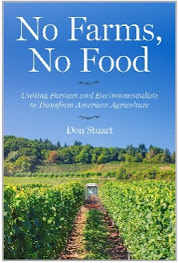
American Farmland Trust’s No Farms No Food History Never More Relevant as Policy Makers Consider 2023 Farm Bill


New book on the organization’s history shares why uniting farmers, trade groups and the environmental community is critical to a much-needed revolutionary Farm Bill

(Washington, DC) – No Farms No Food: Uniting Farmers and Environmentalist to Transform Agriculture by Don Stuart, published today by Island Press, recounts the history of American Farmland Trust and its success uniting disparate interests to bring about the protection of farmland and ranchland and the conservation of environmental resources on which our food, fuel, feed and fiber production rely—on which society and the planet relies.

No Farms, No Food takes readers inside the political and policy battles that determine the fate of our nation’s farmland and food system. It also illustrates the tactics needed to unify fractured interest groups for the common good. No Farms, No Food is both an inspiring history of agricultural conservation and a practical guide to creating an effective advocacy organization. This is an essential read for everyone who cares about the future of our food, farms and environment.


American Farmland Trust was spawned of a time when our nation faced great social, economic and cultural upheaval. Combine inflation, an oil shock that emptied grocery shelves, a wave of environmental regulation, and a farm industry in crisis.

In the 1980s, national concerns about the environment and urban sprawl, and the prospect of regulatory approaches to addressing these concerns, was met by strong opposition from an already struggling farm community. The farm debt crisis of the 80s drove many farmers out of business. By 1985, only 2.2 percent of the population lived on a farm, down from 30.2 percent in 1920. Farmland values had crashed, and land was being lost to development at the rate of 3 million acres a year. A focus on yield, based on “Get Big or Get Out” policies of the 1970s was driving soil loss, compromising water quality and challenging wildlife and biodiversity.


A transformational Federal Farm Bill was needed. The Federal Farm Bill is a massive legislative package that governs agricultural and food programs and drives much of agricultural practice and action. It is renewed every five years.


In those days, between the private, nonprofit environmental groups and the world of groups representing commercial agriculture, collaboration was largely absent. Environmentalists were convinced that the planet was at risk. Farmers were convinced their industry was on the verge of bankruptcy. Neither saw room for compromise.


American Farmland Trust led a sea change, building a coalition that reshaped the relationship between American agriculture and the broader environment movement.  An early and significant example of that was the introduction of the Conservation Title in the 1985 Farm Bill.


Back then and to this day, AFT has advocated for policies that bridge the agricultural and environmental gap, leading groups to meet in the middle. These principles, clearly outlined in Chapter 10 of No Farms No Food, include understanding and respecting underlying motives and points of view. The arguments AFT makes to farmers are not the same ones the organization used with environmentalists. The case is presented to each side in a manner that is grounded in that constituency’s values, stated in their language and respectful of their point of view. But both arguments are true. And the goal is the same for both -- a better world for farmers and the environment.


We are again at a precipice. The Farm Bill is up for renewal in 2023. With all the pressures impacting agriculture and our environment, including the changing climate, 2028 will be too late to implement what is now urgent.


Since early 2020, Americans have witnessed empty grocery store shelves due to disruptions caused by the pandemic. We are experiencing continued supply change disruptions, rising food prices, an oil shock due to the war in Ukraine, the impacts of climate change including droughts, wildfires, derechos and other extreme weather events.


At the same time, our agricultural base is shrinking. AFT’s 2020 “Farms Under Threat: State of the States” report showed that 2,000 acres a day is being lost or compromised due to ill-planned development. Farmers are on the frontlines and all of us who eat will continue to be impacted if we don’t help drive change.


Securing our agricultural land and stewarding it well, building soil health, protecting water quantity and quality, wildlife and biodiversity is critical to our survival.


We must again reshape the Farm Bill to re-incentivize farmland protection and farming practices that foster productivity, profitability and above all a healthy planet where food is abundant and affordable. This will not be easy, requiring all interests to come together including America’s eaters.


In his foreword to the book, Bill Reilly, former EPA administrator and president of the World Wildlife Fund, who once served as the board chair at American Farmland Trust, wrote: “The current class of climate activists could learn a lesson or two from how AFT has approached his work over the years.”


The blueprint is contained in No Farms No Food: Uniting Farmers and Environmentalist to Transform Agriculture, now available from Island Press.

Complementary media copies are available by emailing Lori Sallet, lsallet@farmland.org.

Join AFT’s book release event on April 19th, 7:30PM PT, in person in Seattle WA, or virtually. Click here and then click on tickets.

Don Stuart is a former director for AFT’s Pacific Northwest Regional Office and has also served as executive director for the Washington Association of Conservation Districts and executive director for Salmon for Washington, a nonprofit trade association. Stuart is the author of Barnyards and Birkenstocks: Why Farmers and Environmentalists Need Each Other.


### 

American Farmland Trust is the only national organization that takes a holistic approach to agriculture, focusing on the land itself, the agricultural practices used on that land, and the farmers and ranchers who do the work. AFT launched the conservation agriculture movement and continues to raise public awareness through our No Farms, No Food message. Since our founding in 1980, AFT has helped permanently protect over 6.8 million acres of agricultural lands, advanced environmentally-sound farming practices on millions of additional acres, and supported thousands of farm families. 


Tuesday, April 12, 2022

A simplified solution for vet school applications


WASHINGTON, D.C, April 12, 2022 — The American Association of Veterinary Medical Colleges (AAVMC) has connected with admissions technology leader, Liaison, to offer Time2Track for pre-veterinary students. This tool simplifies the process of tracking experience hours needed to apply to veterinary schools.

Students applying through the Veterinary Medicine Centralized Application Service (VMCAS™) — created by Liaison and used by nearly every veterinary school in the United States — will now be able to use the Time2Track app to streamline the often-time-consuming process of tracking, documenting and sharing relevant experience hours as part of veterinary school applications. 

“We’re pleased to collaborate on the execution of this new app to make the application process more efficient and user-friendly,” said Dr. Andrew T. Maccabe, CEO of the American Association of Veterinary Medical Colleges(AAVMC). “This new integration will help applicants document, organize and submit information that helps our member institutions make the best admissions decisions.” 

“This solution helps prospective veterinary school students track and safeguard their earned hours of experience and seamlessly transfer them to their VMCAS application. Most importantly it makes the highly competitive application process a clear pathway to the profession,” said George Haddad, Founder and CEO of Liaison. 

Learn more at time2track.com. Visit time2track.com/vmcas to receive the latest updates. For more information on VMCAS and a career in Veterinary medicine, visit aavmc.org. 

ABOUT THE AAVMC
The member institutions of the American Association of Veterinary Medical Colleges (AAVMC) promote and protect the health and wellbeing of people, animals, and the environment by advancing the profession of veterinary medicine and preparing new generations of veterinarians to meet the evolving needs of a changing world. Founded in 1966, the AAVMC represents more than 40,000 faculty, staff, and students across the global academic veterinary medical community. Our member institutions include Council on Education (COE) accredited veterinary medical colleges and schools in the United States, Canada, Mexico, the United Kingdom, Europe, Asia, Australia, and New Zealand as well as departments of veterinary science and departments of comparative medicine in the U.S.

ABOUT LIAISON
Over the last three decades, Liaison has helped over 31,000 programs on more than 1,000 campuses more effectively manage admissions through its Centralized Application Service (CAS™) technology and complementary recruitment marketing, processing, and support services. Partnering with over 30 professional associations, the company has developed discipline-wide services for a range of fields, including most of the health professions as well as engineering (EngineeringCAS™), graduate management education (BusinessCAS™), graduate education (GradCAS™), veterinary medicine (VMCAS™), psychology (PSYCAS™) and architecture (ArchCAS™).