Tuesday, February 14, 2023

Over-the-counter livestock antibiotics will require prescription after June 11


Texas A&M AgriLife logo and address


AgriLife Extension experts answer frequently asked questions to prepare livestock owners

By Kay Ledbetter

Don’t wait. Get to know your local veterinarian now and establish a veterinarian-client-patient relationship if you expect to treat livestock in the future, as over-the-counter livestock antibiotics will soon require a prescription.
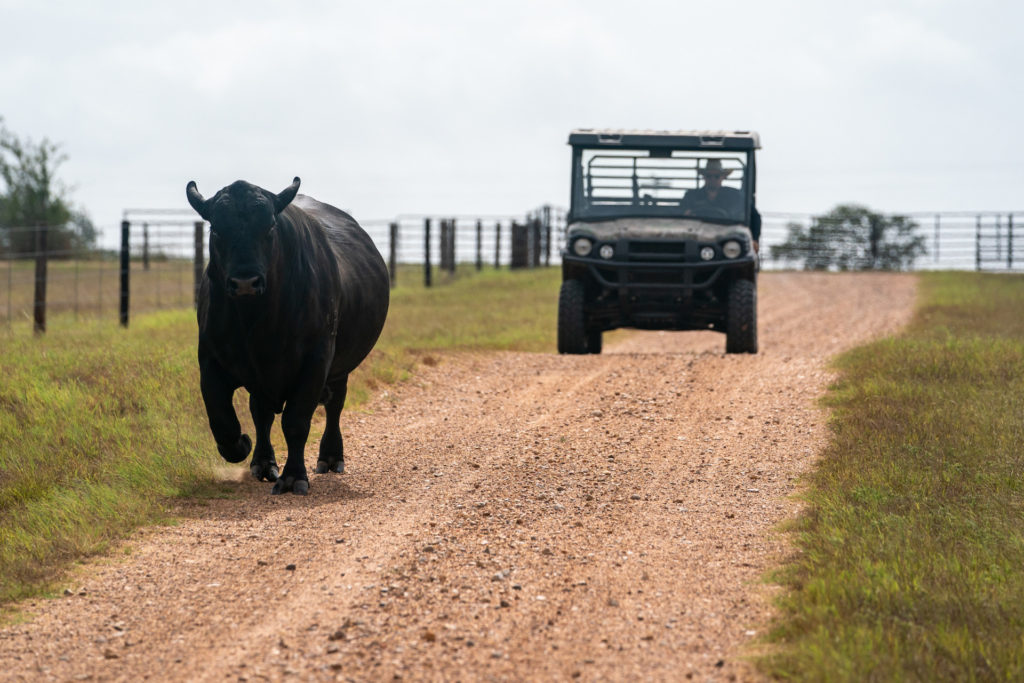
a single cow runs down a dirt road with a man in a Ranger following behind. These animals will need vet-led antibiotic prescriptions soon.
Livestock owners who typically treat their own animals with over-the-counter antibiotics need to be aware of rule changes that begin June. 11. (Texas A&M AgriLife photo by Courtney Sacco)

That is the advice of a team of Texas A&M AgriLife Extension Service experts trying to help livestock owners who are used to going to the local feed store to buy some of their antibiotics and administer treatment themselves.

All of that will change on June 11, when these medically important antimicrobial drugs will require veterinary oversight.

The following experts answer some frequently asked questions to let livestock owners know what to expect:

— Tom Hairgrove, DVM, Ph.D., AgriLife Extension cattle veterinary specialist in the Texas A&M College of Agriculture and Life Sciences Department of Animal Science, Bryan-College Station.

— Joe Paschal, Ph.D., former AgriLife Extension livestock specialist, now representing industry as the executive vice president of the American Brahman Breeders Association, Corpus Christi.

— Billy Zanolini, Ph.D., assistant professor and 4-H and youth development specialist, Bryan-College Station.

What is the new rule?

The Food and Drug Administration recommends manufacturers of medically important antimicrobial drugs that continue to be available over the counter and are approved for use in animals, both companion and food-producing, regardless of delivery mechanism, to voluntarily bring these products under veterinary oversight or prescription marketing status.

By June 11, labels of the remaining over-the-counter antibiotics for livestock use will be required to read: “Caution: Federal law restricts this drug to use by or on the order of a licensed veterinarian,” and the purchaser must have a prescription or drug order to buy it.

How does this differ from the Veterinary Feed Directive and why are the two confused?

Over-the-counter antibiotics used in animal feed were moved to Veterinary Feed Directive, VFD, in 2017, allowing closer veterinarian oversight of antimicrobial use in animal feeds. All over-the-counter antibiotics placed in the drinking water were moved to prescription status at the same time. This new rule concerns the few antibiotics that remained available over the counter in the form of injectables, intramammary tubes and boluses.

What does medically important mean?

Medically important drugs are essential to human medicine and also used to treat animals.

What antibiotics does this affect?

Prescription-only items will include injectable tylosin, injectable and intramammary penicillin, injectable and oral oxytetracycline, sulfadimethoxine and sulfamethazine, gentamicin, cephapirin and cephapirin benzathine intramammary tubes. 

How and where can these items be purchased after the rule goes into effect?

Individuals with veterinary-client-patient relationships, VCPR, may purchase antibiotics directly from their veterinarian or from a distributor with the vet’s prescription.

What constitutes a VCPR?

Three requirements must be met:

(1) The veterinarian has assumed the responsibility for making clinical judgments regarding the health of the animal and the need for medical treatment, and the client has agreed to follow the veterinarian’s instructions.

(2) The veterinarian has sufficient knowledge of the animal to initiate at least a general or preliminary diagnosis of the animal’s medical condition. This means that the veterinarian has recently seen and is personally acquainted with the keeping and care of the animal by examining the animal or by medically appropriate and timely visits to the premises where the animal is kept.

(3) The veterinarian is readily available or has arranged emergency coverage and follow-up evaluation in the event of adverse reactions or the failure of the treatment regimen.

What’s your advice to livestock owners without a VCPR?

Producers who already have a VCPR in place and purchase their animal health products through their veterinary office or through other distributors under an existing prescription system will likely notice little change. However, this may have significant impacts on how the livestock owners can access antibiotic therapy for their animals, so contact your local veterinarian as soon as possible.

Why shouldn’t I go ahead and stock up on antibiotics now?

Do not stock up on these products to avoid needing a prescription once this change takes effect. Animal health products are expensive, have expiration dates and are sensitive to storage time and conditions. 

Are there any specific instructions that should be given to livestock show exhibitors?

Livestock exhibitors, like all producers in animal agriculture, are responsible for understanding animal treatment regulations. For junior shows, students complete the “Quality Counts” quality-assurance curriculum that stresses the importance of VCPR.

What health/medical items can livestock owners continue to purchase over the counter?

Most vaccines, dewormers, injectable and oral nutritional supplements, ionophores, pro/prebiotics and topical nonantibiotic treatments will not require a veterinary prescription. However, there are some exceptions. Always read the label.

Wednesday, February 8, 2023

Texas Farm, Ranch and Wildlife Expo is Feb 21-22 in Abilene


Includes Big Country agribusiness event, Agriculture Legacy Luncheon


By Susan Himes, Susan.Himes@ag.tamu.edu

The Texas A&M AgriLife Extension Service in Taylor County and the Abilene Chamber of Commerce will cohost the 2023 Texas Farm, Ranch and Wildlife Expo, the region’s longest-running farm and agribusiness show Feb. 21-22 in Abilene.

A cotton and crop conference are among the Texas Farm, Ranch and Wildlife Expo events offered Feb. 21-22. (Texas A&M AgriLife photo by Laura McKenzie)

The 24th annual event will be held at the Taylor Telecom Arena at 1700 Highway 36. Lawrence Hall-Abilene is the presenting sponsor.

The event will be held from 7:30 a.m.-6 p.m. on Feb. 21 and from 7:30 a.m.-3 p.m. on Feb. 22.

There is no cost to attend and there will be over 150 vendor and educational booths.

The focus Feb. 21 will be crops and commodities. Cattle, ranch and wildlife will be highlighted Feb. 22.

Texas Department of Agriculture continuing education units are offered. On Feb. 21, a total of seven CEUs are available: three general, three integrated pest management and one laws and regulations.

Feb. 22 will offer 10 CEUs — five general, three integrated pest management and two laws and regulations.

“Our goal is to meet the needs of as many people in agriculture as possible and, in addition to our mainstream agriculture topics,” said Steve Estes, AgriLife Extension agriculture and natural resources agent for Taylor County. “This year we’ve expanded to include topics for veterans, those involved in agricultural land real estate, and people who may be new to agriculture or thinking about becoming involved.”

Texas Real Estate Commission continuing education units are also available, four on Feb. 21 and three on Feb. 22.

Visit the AgriLife Extension office in Taylor County website for a complete schedule of events, demonstrations and social activities.

Feb. 21, Crop and Commodity Day

The first day of the Expo will feature the following:

  • Cotton and Crops Conference.
  • Town and Country Women’s Fair.
  • Trade Show Opens; Ribbon Cutting at Lawrence Hall Abilene Booth.
  • Rolling Plains Cotton Growers Annual Meeting.
  • Property Tax Valuations.
  • Hemp Production Update.
  • Pig Brig Demo.
  • Stock Pond Management.
  • Intellectual Property Basics for Rural America.

Feb. 22, Cattle, Ranch and Wildlife Day

The first Agriculture Legacy Luncheon, to honor the Farm Family of the Year, will be part of the Feb. 22 event activities. The luncheon will feature Joe Leathers, general manager of 6666 Ranch, Guthrie, and celebrity cowboy chef Mike Newton, Stephenville.

The Feb. 22 topics are:


Register for Free Webinars on Farm and Ranch Tax Strategies and Schedule F


Filing taxes for an agricultural operation can be challenging, and many producers may not have the funds to hire accountants or tax professionals to assist. Join USDA’s Farm Service Agency (FSA) for two free webinars:

Wednesday, February 22, 3:00 pm Eastern: Farm and Ranch Tax Strategies 2023. 

There is a strategy to managing your taxes and now is the time to start planning.  Join USDA and Bob Rhea, University of Illinois Tax School, to learn about tax management options for 2023.   

Register here.  

Wednesday, March 22, 3:00 pm Eastern: Schedule F (Profit or Loss From Farming).

The Schedule F is used to report taxable income earned from farming, ranching, and agricultural activities.  Join USDA and Guido van der Hoeven, President, Land Grant University Tax Education Foundation, Inc. (LGUTEF), for a line-by-line review of this tax form.   

Register here. 

Thursday, January 26, 2023

Registration opens for the Ag Women Engage Conference


                                                Photo courtesy of Freepik

WEST LAFAYETTE, Ind. — The 2023 Ag Women Engage Conference (formerly known as the Midwest Women in Agriculture Conference) begins on Feb. 22 at the new Terre Haute Convention Center. The conference includes two days of guest speakers, networking opportunities and breakout sessions addressing personal, family and farm issues affecting women, families and farm businesses.

Brenda Mack, a fourth-generation small crop producer and associate professor in the Department of Social Work at Bemidji State University, will present a keynote session on building and strengthening resiliency for those in agriculture.

Educational sessions throughout the two days will cover farm succession planning, marketing, new technologies, financial strategies, mental health resources, home food vendor guidelines and more.

“The Ag Women Engage Conference continues the networking and professional development tradition set by the Midwest Women in Agriculture Conference. It’s a new name, but the same fantastic education and conversations will be taking place,” said Elysia Rodgers, Purdue Extension – Dekalb County director, agriculture and natural resources educator, and conference organizer.

Youth in grades eight through 12 and undergraduates are invited to attend the Young Ladies in Agriculture Forum, taking place in tandem with the AWE Conference on Feb. 22 from 1-8 p.m. ET. Topics include financial strategies, building a strong resume and networking in the agriculture industry.

A pre-conference session, “Becoming the Employer of Choice,” is scheduled for Feb. 21 from 10 a.m. to 5 p.m. ET. The human resource management curriculum is geared for farm managers and owners looking to improve their human resource management skills.

The cost for the pre-conference session is $50. Conference registration is $125. Register by February 10 online. The Young Ladies in Agriculture Forum cost is $20, with registration online. For accommodation or more information, contact Rodgers at 260-925-2562 or eberry@purdue.edu.


Thursday, January 19, 2023

2023 Indiana Small Farm Conference March 2 and 3


WEST LAFAYETTE, Ind. – Registration is now open for the 2023 Indiana Small Farm Conference, the premier annual event for the state’s farming community. The 11th annual conference and trade show will take place March 2 and 3 at the Hendricks County Fairgrounds in Danville.

One of the featured keynote speakers is Hunter Smith, former Indianapolis Colts punter and co-owner of Wonder Tree Regenerative Farm in Zionsville, Indiana.

“At WonderTree we hope to prove, once again, the viability and sustainability of decentralized, local farms serving communities as primary sources of food, experiences and culture,” Smith said.

Since 2013 the conference has featured comprehensive, instructive and enjoyable programming about diversified farming and local food systems, bringing together novice and experienced small-scale farmers. For more information and registration, visit purdue.ag/sfc.

“I grew up on a small family farm where nothing was ever wasted, and food was simple and delicious,” said Sara Frey, owner of Frey Farms and a 2023 conference keynote speaker. “Every growing season yielded different crops, and we’re proud to bring that produce to market today. Some of my fondest memories are of trying to figure what to do with the imperfect or ‘ugly fruit,’ which led to my vision of using all of what we grow and creating farm-fresh beverages for families.”

This year’s conference offers 12 tracks, allowing attendees to choose sessions that best align with their farming operations and goals. Among the topics are:

  • Urban agriculture
  • Vegetable production
  • Farm stress
  • Marketing
  • Technology on small farms
  • Livestock
  • Equity in the food system
  • Value-added products
  • Fruit production

“The Indiana Small Farm Conference is a great way to learn what’s next in production, marketing and other areas to make the most of your efforts in 2023 and for years to come,” said Amy Thompson, Purdue Extension’s beginning farmers coordinator and a conference organizer.

Follow the conference on Twitter and Instagram at @SmallFarmPurdue or on Facebook at @PurdueExtensionSmallFarms, with the hashtag #PurdueSmallFarms.


Wednesday, January 18, 2023

US hay stocks fall to lowest level since ’74


Drought and high fertilizer prices took a significant bite out of hay production across the U.S. Extension Economist James Mitchell expects farmers will pay more for hay in the current marketing year. (U of A System Division of Agriculture file photo by Lauren Husband)

Nationwide, other hay production totaled 64.84 million tons in 2022, down 9 percent from the prior year.

By Mary Hightower
U of A System Division of Agriculture

Fast facts

  • U.S. hay production down 9 percent
  • U.S.’s largest producer, Texas, saw 40 percent decline

FAYETTEVILLE, Ark. — High fertilizer prices and drought in 2022 handed hay production in the United States its biggest decline in 11 years with stocks at their lowest level since data collection began, according to the National Agricultural Statistics Service.

The stats were part of the Jan. 12 Crop Production Summary from NASS, which is part of the U.S. Department of Agriculture. The report includes information about all U.S. crops, their production, acreage, and yield. NASS places hay in two categories, alfalfa and “other hay,” the latter being relevant to the Southeastern U.S. 

According to the summary, May 1 hay stocks were tight, totaling 16.77 million tons or 7 percent lower year over year.

“May 1 stocks, combined with lower 2022 hay production, put hay supplies at the lowest level on record since the data began in 1974,” said James Mitchell, extension economist for the University of Arkansas System Division of Agriculture. “The previous record low in hay supplies was in 2021.”

Production declines
Nationwide, other hay production totaled 64.84 million tons in 2022, down 9 percent from the prior year, with Arkansas seeing a 16 percent decline. Texas, the nation’s largest hay-producing state, produced 6.15 million tons, a 40 percent decline compared to 2021.

“Most Southern Plains and Southeast states had double-digit hay production declines,” said Mitchell said.

Mississippi saw a 16 percent decline, Tennessee a 13 percent decline, and Kentucky, a 20 percent decline. Florida bucked the trend, seeing a 7 percent increase in hay production. 

“USDA’s estimate for Arkansas is much better than what I would have predicted last summer,” Mitchell said. Based on conversations with producers last year, he said “I was expecting a decline closer to 25 percent.

“It was hard to predict whether we would get late-season rain last summer,” Mitchell said. “It was even hard to predict whether a late-season rain would help us make up for the severe production losses we had in July. Conditions improved enough in September for us to make up for some of that loss.”

Yields down
“Expensive fertilizer and poor precipitation impacted yields,” he said. “U.S. hay yields averaged 1.87 tons per acre or 6 percent lower year over year. Yields dropped 9 percent in Arkansas to two tons per acre. Neighboring Oklahoma and Texas saw yields averaging 1.25 tons per acre and 1.50 tons per acre, respectively.”

Overall, other hay acreage fell 2 percent to 34.63 acres. Arkansas’ hay acres declined by 5 percent, while Texas saw a 25 percent reduction in hay acres in 2022.

Mitchell said that “declining cattle inventories, expensive inputs, and high crop prices all likely contributed to the decline in 2022 hay acreage.”

Higher prices
Mitchell said farmer would likely be paying more for hay.

“Like other commodities, price comparisons are based on the marketing year,” he said. The hay marketing year begins in May and ends in April.

“For the May 2021-April 2022 marketing year, prices averaged $147 per ton,” Mitchell said. “For the May 2022-April 2023 marketing year, we forecast prices to average $170 per ton.”


National forage and grazing experts to speak at annual conference


WEST LAFAYETTE, Ind. — The Heart of America Grazing Conference will take place Feb. 20 and 21 at the Ferdinand Community Center in Ferdinand, Indiana. Hosted by the Indiana Forage Council (IFC) in collaboration with Purdue Extension, the annual event will feature forage and grazing experts from across the nation.

 “Attending the Heart of America Grazing Conference is an invaluable opportunity to network with forage-livestock input providers at the trade show, and networking with participants that have an interest in pasture improvement has value, too,” said Keith Johnson, a professor of agronomy in Purdue University’s College of Agriculture.

Highlighted speakers will lead discussions on cutting-edge research in grazing, soil science and grazing options with cattle and small ruminants, among other key topics.

Jason Tower, superintendent of the Southern Indiana Purdue Agricultural Center, and Ronald Boehm of Boehm Farms are featured speakers.

 “The 2023 conference will be an excellent opportunity for producers and educators to expand their knowledge of grazing and soil management. Improving these skill sets can have a positive impact not only on livestock performance but also on the environment,” Tower said.

Boehm said, “The timing of the conference works well for the attendees to take their newly gained knowledge back home and begin to plan for implementation as they strive to refine their operations toward their goals of livestock husbandry, financial success and environmental stewardship.”

Additional speakers include Greg Halich, University of Kentucky; Alan Franzluebbers, USDA-ARS North Carolina; and Johnny Rogers, coordinator of the Amazing Grazing Project and North Carolina State University.

Registration information and event details can be found on the IFC website and Facebook page.