Thursday, October 26, 2023

USDA now Hiring Pathway Student Trainees Nationwide


USDA’s Farm Service Agency (FSA) and Natural Resources Conservation Service (NRCS) are hiring pathway student trainees in multiple locations. Recruitment and relocation incentives may be offered and salary ranges from $33,241 - $43,801 per year.   

FSA helps agricultural producers invest in, improve and expand their agricultural operations through farm loans, risk management programs, and recovery support in times of economic stress or natural disaster.

NRCS offers conservation planning and technical assistance to help agricultural producers implement practices that sequester carbon, mitigate against climate change and conserve other natural resources. 

Applicants must be enrolled or accepted for enrollment for at least a half-time basis at a qualifying educational institution in a certificate, degree, or diploma program with a cumulative GPA of 2.5 or higher on a 4.0 scale. Other requirements apply.

 Candidates selected from these announcements may be eligible for non-competitive conversion to a permanent position in the competitive service, provided that all terms of the Internship Program are met and there is an available position. Conversion is not mandatory or guaranteed and is at agency discretion.

USDA is hiring a variety of student trainees in agronomy, soil science, biology, forestry, natural resource management, rangeland management, archaeology, economics, engineering, management analysis, cartography, geology, soil conservationist, survey statistician, loan assistant/specialist, program technician, and administration.  Click here to view all USDA student trainee openings.  Deadlines vary by position and location.

Tuesday, October 3, 2023

Northwest Arkansas Small Ruminants Field Day set for Oct. 28 in Fayetteville


By John Lovett
University of Arkansas System Division of Agriculture
Arkansas Agricultural Experiment Station


Fast facts

  • Free event provides education on raising sheep and goats
  • Topics include forage, nutrition, grazing strategies, parasite control, flock management
  • Event co-sponsored by U.S. Department of Agriculture sustainability program

FAYETTEVILLE, Ark. — Small ruminants have practical and profitable uses on the farm. Still, there is a lot to know about sheep and goats to maintain their health and the sustainability of the land they are on.

Sheep in field with blue sky background.
FIELD DAY — Sheep graze at the Milo J. Shult Agricultural Research and Extension Center in Fayetteville, site of the Oct. 28 Northwest Arkansas Small Ruminants Field Day. (U of A System Division of Agriculture photo)

A free event offering education on how to raise sheep and goats will be held Saturday, Oct. 28, at the Milo J. Shult Agricultural Research and Extension Center in Fayetteville with sponsorship from Soil for Water, a forage sustainability project funded by the U.S. Department of Agriculture Sustainable Agriculture Research and Education program.

The Northwest Arkansas Small Ruminants Field Day, hosted by the University of Arkansas System Division of Agriculture, will be held from 8:30 a.m. to noon at 1935 W. Heck St. in Fayetteville.

Lunch will be provided after the morning’s learning sessions and demonstrations with Dirk Philipp, associate professor of forage agronomy, Dan Quadros, assistant professor and small ruminant extension specialist, and other speakers from the animal science department at the University of Arkansas System Division of Agriculture.

In addition to ways cattle producers can integrate sheep into their farming operation, Philipp said participants will be taught sustainable grazing techniques based on research conducted by the Arkansas Agricultural Experiment Station, the research arm of the Division of Agriculture. Quadros said sheep are a growing segment of Arkansas livestock operations, and small ruminants can be an asset for big and small farms.

“This field day will provide hands-on opportunities and demonstrations from the classroom to the farm-level environment,” Quadros said. “It will be very valuable for beginning farmers who want to adopt new technologies and learn the business risks and rewards, as well as established cattle ranchers looking for ways to maximize use of their land.”

Coffee and pastries will be served at 8:30 a.m. before a “farm walk and talk.” Joining Philipp and Quadros in presentations will be Linda Coffey, livestock specialist for the Southeast Regional Office of the National Center for Appropriate Technology, along with Washington County Extension Agent Ronnie Horn and Benton County Extension Agent and Staff Chair Johnny Gunsaulis.

Learning sessions will include the following topics:

  • Forage and nutrition
  • Grazing strategies
  • Reproduction and flock management
  • Parasite identification and control
  • Practical, on-farm necropsy

Registration for the event is required to attend. To register, please visit https://bit.ly/Small-Ruminants-Field-Day-Registration.

To learn more about Division of Agriculture research, visit the Arkansas Agricultural Experiment Station website: https://aaes.uada.edu. Follow on Twitter at @ArkAgResearch. To learn more about the Division of Agriculture, visit https://uada.edu/. Follow us on Twitter at @AgInArk. To learn about extension programs in Arkansas, contact your local Cooperative Extension Service agent or visit www.uaex.uada.edu.

About the Division of Agriculture

The University of Arkansas System Division of Agriculture’s mission is to strengthen agriculture, communities, and families by connecting trusted research to the adoption of best practices. Through the Agricultural Experiment Station and the Cooperative Extension Service, the Division of Agriculture conducts research and extension work within the nation’s historic land grant education system.

The Division of Agriculture is one of 20 entities within the University of Arkansas System. It has offices in all 75 counties in Arkansas and faculty on five system campuses.

The University of Arkansas System Division of Agriculture offers all its Extension and Research programs and services without regard to race, color, sex, gender identity, sexual orientation, national origin, religion, age, disability, marital or veteran status, genetic information, or any other legally protected status, and is an Affirmative Action/Equal Opportunity Employer.


Friday, August 4, 2023

Southeast goat producers marketing survey

Goat experts from seven land-grant universities (Langston, Tuskegee, Virginia State, Tennessee, Fort Valley State, Florida A&M, Prairie View A&M) from the Southeast USA are working together to promote the sustainable goat industry in this region. 

One of the challenges this team has realized is the marketing issues producers are facing in this region. Therefore, this team is conducting a survey study with producers from the Southeast Region (Alabama, Arkansas, Florida, Georgia, Kentucky, Louisiana, Mississippi, North Carolina, Oklahoma, South Carolina, Tennessee, Texas, Virginia, Puerto Rico, and US Virgin Islands). 

The aim of this study is to help meat goat producers from the Southeast overcome challenges in marketing goats and goat products. Based on the survey results, strategies will be developed and used to educate goat producers to overcome the marketing challenges. 

All goat producers in the southeast USA are requested to take the survey below to help develop the marketing strategies for goats and goat products. The survey will take approximately 15 minutes to complete. To take the survey, click this survey link or scan the QR code. Please submit by Sept. 30, 2023.

SurveyLink


Your response is extremely valuable to understand the challenges you are facing and develop marketing strategies to overcome them. Please feel free to share this message and survey link and/or QR code (below) to your fellow goat producers. We need as many responses as possible to gather necessary information in order to develop strategies that help producers marketing their goats and goat products in the southeast USA. 


Thank you in advance for taking time and completing this survey!


Dr. Uma Karki, Tuskegee University

On behalf of the entire study team

Wednesday, July 19, 2023

Animal Agriculture Alliance updates reports covering animal rights extremist connections and tactics


Groups bring in more than $800 million in income annually; 539 attacks targeted agriculture in 2022


July 19, 2023 – Today, the Animal Agriculture Alliance released two reports detailing the interconnectedness of the animal rights movement, as well as tactics targeting animal agriculture. The Animal Rights Extremist Web exemplifies how animal rights groups are strategically connected in many ways, including personnel and financial support. The Radical Vegan Activism in 2022 report highlights efforts to attack animal agriculture and the true intentions of these organizations with quotes from leadership.


“No matter the animal rights extremist group or the tactics used, they all share the same goal of eliminating animal agriculture and taking meat, dairy, poultry, eggs, and seafood off of our grocery store shelves and family tables,” said Abby Kornegay, manager, issues and engagement, Animal Agriculture Alliance. “These reports succinctly detail those true intentions, the strategic efforts of the animal rights movement to further their agenda, and key tactics for the animal agriculture community to be aware of.”


Nearly one-third of animal rights extremist attacks documented in 2022 targeted farmers and food workers, putting them and animals in danger. Documented direct actions to animal agriculture include:


  • 95 vandalism incidents
  • 70 stolen animals
  • 60 criminal trespasses
  • 10 arson cases
  • 9 harassment and intimidation incidents


“Extremists are getting ever bolder in their efforts against animal agriculture, and direct actions at the farm, processing facility, and retail store continue to rise,” said Kornegay. “Farmers, processors, and the entire food supply chain are encouraged to implement security measures that protect against potential threats.”


In addition to demanding change through direct actions, animal rights groups are also attempting to force change through fundraising efforts which help fund their various efforts and campaigns. The major animal rights extremist groups included on the Animal Rights Extremist Web are major fundraisers and bring in more than $800 million in income annually. Organizations like People for the Ethical Treatment of Animals (PETA) saw a dramatic increase in revenue between their previous fiscal year and current. In PETA’s 2021 tax filing, total revenue equaled $68 million and according to its website, 2022 revenue equals $82 million, a nearly $14 million increase.


Several updates were made to the Animal Rights Extremist Web including several new groups for the farm and food community to be aware of, including The Accountability Board and the Organization for Competitive Markets. The Accountability Board, which fronts itself as a non-radical group and invests in over 100 of the largest publicly traded companies to force environmental and animal welfare change, is led by former Humane Society of the United States (HSUS) employees Josh Balk and Matthew Prescott. The Organization for Competitive Markets, which seeks to “enforce” rules within the agriculture community, was added to the web due to Marty Irby’s involvement as a board member. Irby is also a former employee of HSUS with close ties to its former president and CEO Wayne Pacelle. Sentient Media, Animal Partisan, and Farm Action were also added to the web.


For more information about the Alliance’s work to monitor animal rights extremism, or to view the reports, visit animalagalliance.org/initiatives/monitoring-activism.


To learn more about proactive security measures to protect against potential threats, visit animalagalliance.org/initiatives/farm-security/. 

About the Alliance:

The Alliance safeguards the future of animal agriculture and its value to society by bridging the communication gap between the farm and food communities. We connect key food industry stakeholders to arm them with responses to emerging issues. We engage food chain influencers and promote consumer choice by helping them better understand modern animal agriculture. We protect by exposing those who threaten our nation’s food security with damaging misinformation.

Tuesday, June 27, 2023

Arkansas Extension Livestock Clinic offers hands-on skills for youth new to show ring


June 21, 2023


By Tracy Courage

U of A System Division of Agriculture 

Fast Facts: 

·       Livestock clinic open to all youth interested in showing livestock

·       Clinic set for 8 a.m.-5 p.m. July 15 at Drew County Fairgrounds in Monticello

·       Register by June 30 at https://bit.ly/livestock-clinic

(606 words)
(Newsrooms: Photo of livestock competition at 
https://flic.kr/p/2jYf9jm )

MONTICELLO, Ark. — Aside from the practicality of raising animals for income or food, there’s also the thrill of stepping into the show ring with a prized animal and winning accolades.

The University of Arkansas System Division of Agriculture will host a free Livestock 101 Clinic on July 15 for youth interested in learning to show cattle, sheep, market and dairy goats, sheep, swine, rabbits and poultry. The clinic will take place 8 a.m-5 p.m. at the Drew County Fairgrounds, AR-35 East in Monticello. Registration is due by June 30 and available at https://bit.ly/livestock-clinic.

Youth will learn the basics of prepping their animal for show competition and get hands-on help with showing their respective species and tack identification. The event also includes lunch for participants and a mock show competition. Overnight stalling for livestock and hotel information is also available for participants who will be commuting to southeast Arkansas for the event.

“This is mainly a beginners’ clinic,” Drew County Extension intern Rayvin Callaway said. “There will be some advanced material, but most everything will be geared toward kids new to the show ring.”

Callaway, 21, who is double majoring in animal science and plant and soil science at the University of Arkansas at Monticello grew up showing livestock. She organized the livestock clinic last summer when she interned with the Bradley County Extension Office. This summer, she is interning with Drew County Extension, and she knew she wanted to offer the clinic again.

“Showing livestock teaches responsibility, confidence, team building, the importance of researching their specific animal and so much more,” Callaway said. 

New this year is a livestock clinic for parents, who will learn about feed and feedstuffs as well as vaccinations and health for each species.


Some of the speakers include:

·       Dr. Rocky Lindsey — associate professor of animal sciences, College of Forestry, Agriculture and Natural Resources, University of Arkansas at Monticello 

·       Les Walz — Agriculture and Natural Resources educator for livestock and forages, Division of Agriculture

·       Dr. Maribel Nelson, DVM — associate professor of animal sciences, College of Forestry, Agriculture and Natural Resources, University of Arkansas at Monticello

·       Dr. Dan Quadros — extension small ruminants specialist, Division of Agriculture

·       Dr. Maggie Justice — assistant professor and extension beef cattle specialist, Division of Agriculture

·       Anthony Rodriguez — 4-H volunteer

·       Frankie Harper — show poultry producer, judge and mentor for the southeast Arkansas families involved in showing.

Attendees do not have to be members of Arkansas 4-H, but information about 4-H opportunities and registration will be offered. 

Many Arkansas 4-H members are currently involved in animal science-related projects, including horse and equine programs, livestock, veterinary sciences, poultry science, rabbits, sheep and goats, swine, and meat judging and identification. Many choose to compete in the show arena. 

“They get their showmanship skills from their 4-H experience,” said Debbie Nistler, assistant vice president for 4-H & Youth Development with the Division of Agriculture. “Showmanship evaluates the skills of the youth in the ring — how they present the animal, how they fit it. It is the part of the livestock exhibition process that is all about youth skills. They don't need an expensive animal. They just need to develop the skills.”


For more information about the clinic, call Rayvin Callaway at 870-308-1820.


To learn more about 4-H and other extension programs in Arkansas, contact your local Cooperative Extension Service agent or visit www.uaex.uada.edu. Follow us on Twitter and Instagram at @AR_Extension. To learn more about Division of Agriculture research, visit the Arkansas Agricultural Experiment Station website: https://aaes.uada.edu. Follow on Twitter at @ArkAgResearch. To learn more about the Division of Agriculture, visit https://uada.edu/. Follow us on Twitter at @AgInArk.


About the Division of Agriculture

The University of Arkansas System Division of Agriculture’s mission is to strengthen agriculture, communities, and families by connecting trusted research to the adoption of best practices. The Division of Agriculture conducts research and extension work within the nation’s historic land grant education system through the Agricultural Experiment Station and the Cooperative Extension Service.

The Division of Agriculture is one of 20 entities within the University of Arkansas System. It has offices in all 75 counties in Arkansas and faculty on five system campuses.

The University of Arkansas System Division of Agriculture offers all its Extension and Research programs to all eligible persons without regard to race, color, sex, gender identity, sexual orientation, national origin, religion, age, disability, marital or veteran status, genetic information, or any other legally protected status, and is an Affirmative Action/Equal Opportunity Employer.


# # #


Thursday, March 30, 2023

Spring Livestock Guardian Dog Field Day set April 14 in Sonora TX

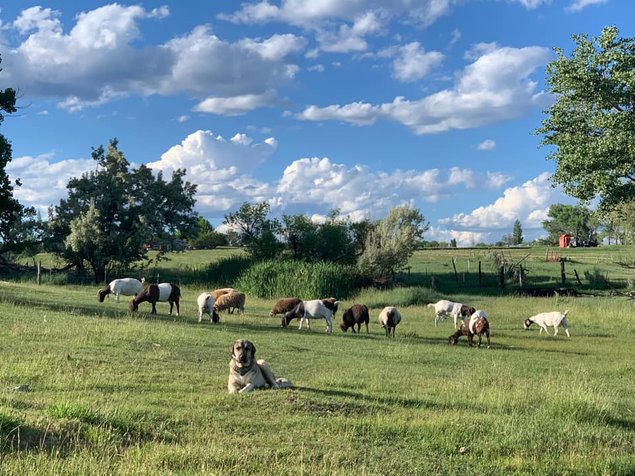
A livestock guardian dog in a lush green pasture surrounded by his charges. The goats graze against a bright blue sky with fluffy clouds.

Livestock Guardian Dogs can provide protection against predators for sheep and goat raisers. The Spring Livestock Guardian Dog Field Day will take place at the Texas A&M AgriLife Research Station in Sonora. (Texas A&M AgriLife photo) 

Event to include discussions on predation, ranch tour, workshops

By  Susan Himes 

The Texas A&M AgriLife Extension Service’s Spring Livestock Guardian Dog Field Day will be held April 14 in Sonora.

The Livestock Guardian Dog, LGD, field day will be at the Texas A&M AgriLife Research Station in Sonora, 395 County Road 760. The program will start at 8 a.m. and conclude around 4 p.m. Morning refreshments and lunch will be provided.

Registration is $25 for an individual or $40 for a couple before April 7. After that date, the cost is $30 and $50, respectively. April 13 is the last day to register. Advance registration is required through the AgriLife Extension office in Sutton County at 325-387-3101.

A ranch tour of the research station and producer panel will be two of the event highlights. Vendors and LGD breeders will be onsite to speak with producers.

Predation prevention

“The biggest single loss in sheep and goat production is predation,” said Reid Redden, Ph.D., AgriLife Extension sheep and goat specialist and director of the Texas A&M AgriLife Research and Extension Center in San Angelo. “The problem is not going away and, in many areas, it’s increasing.” 

Redden said the field day will be very helpful to all LGD owners, but especially for those with little or no dog-handling experience.

“This workshop is part of the center’s ongoing effort to help producers adopt the age-old practice of keeping specially bred and trained dogs with livestock as a deterrent to predation,” said Bill Costanzo, AgriLife Research LGD specialist, San Angelo.

Field day topics and speakers

The featured topics and speakers for the field day are:

  • Using LGDs on Small Versus Large Ranches – Redden.
  • GPS Trackers – Thomas Remmert, Lone Star Tracking co-founder, The Woodlands.
  • The Texas Livestock Guardian Dog Association: Information and Updates – Walter Pfluger, association treasurer, San Angelo.
  • Sheep and Goat Predator Management Board – Curry Campbell, board member, San Angelo.

Saturday, March 18, 2023

Red clover extract improved food intake of sheep on toxic tall fescue


By John Lovett

University of Arkansas System Division of Agriculture

Arkansas Agricultural Experiment Station


Fast facts

·       Red clover extract fed to sheep on toxic tall fescue improved digestible organic matter

·       Results expected to be similar in cattle

·       Tall fescue toxicosis leads to fewer and lower weaning weights

·       Feed intake decreased as red clover extract levels increased beyond a certain level 


FAYETTEVILLE, Ark. — Research conducted by the Arkansas Agricultural Experiment Station using a red clover extract in feed shows promise in offsetting some of the adverse effects of tall fescue toxicosis in livestock, a problem with an estimated $1 billion impact in decreased production.


Many pastures in Arkansas and around the country are planted in Kentucky 31 tall fescue. A toxic endophyte fungus that infects the grass causes constriction of blood vessels in mammals. Decreased food intake is a side effect of what’s called “tall fescue toxicosis.”


Ken Coffey, animal science professor with the Arkansas Agricultural Experiment Station, noted that reduction in feedintake is one of the symptoms of tall fescue toxicosis and a major driver in reduced animal performance, which can mean fewer cow calves born and lower weaning weights. Coffey said he has seen milk production in ewes drop when exposed to the toxin to the point their lambs die from starvation.


Studies have shown that across the Tall Fescue Belt, where Kentucky-31 fescue predominantly grows, tall fescue toxicosis has led to a 30 percent reduction in calf births and a 70-pound reduction in weaning weights, Coffey said. 


Effects of red clover

An Arkansas Agricultural Experiment Station study has shown a small amount of red clover extract helped offset the effects of tall fescue toxicosis in sheep. But too much red clover extract also decreased feed intake. Coffey expects the impact to be similar in cattle.


"Clover has estrogenic compounds, and over the years, we've seen some positive things with estrogenic compounds," Coffey said. "If you can get clover to grow in your pasture, that's great, but many people can't keep the clovers, so we used an extract as a supplement in the feed for the study."


How the research was conducted

Researchers offered Dorper lambs one of five diets of bermudagrass hay supplemented with tall fescue seed for the study. In addition to a positive control of non-toxic fescue seed, researchers offered lambs diets with toxic fescue seed with no red clover extract or toxic fescue with 0.33, 0.67, or 1 percent of the diet as red clover extract.


In the 2022 experiment station study, lambs offered toxic fescue ate 36 percent less than those offered the non-toxic diet. However, lambs on toxic fescue with 0.33 percent red clover extract consumed 15 percent more overall and 6 percent more digestible organic matter than those provided with toxic fescue without the red clover extract.


Coffey said digestible forage consumed directly relates to animal performance.


But there can be too much of a good thing. Greater concentrations of red clover extract led to less food intake among lambs. 


"The proper dose of red clover extract is still not a complete solution, like so many other things that have been tried, but it does offer hope of offsetting a sizeable portion of the toxicity," Coffey's said.


More research is needed

Coffey said that while the study's results are promising, more research is needed to evaluate different red clover extract sources and better define estrogenic compound concentrations. He would also like to see more evaluations of grazing and delivery methods of the red clover extract to ruminants and study the impact of feeding red clover leaves at low levels to sheep or cattle on toxic fescue.


"Research on this issue has been conducted over the past 70 years without the discovery of a complete solution to the problem, indicating its complexity," Coffey wrote in a study impact statement. "Dilution of tall fescue pastures with clovers has been recommended for many years now, but clovers are difficult to maintain in many tall fescue pastures because of the thin, drought-prone soils that much of the toxic fescue thrives in."


The study was conducted on sheep instead of cattle at the experiment station to decrease expense, improve accuracy and shorten the study timetable. As ruminants, sheep and cattle have many physiological similarities that allow research material to translate across species.


Coffey noted that fescue toxicosis mitigation tactics are something to do whenever an animal is on tall fescue because the toxicity and impacts are variable throughout the year.


"If they're on fescue and the forage is toxic, it costs performance. It's just a matter of how much," Coffey said.


Coincidentally, Coffey's research has shown that tall fescue toxicity rises at a critical season between mid-May and mid-June when ranchers reintroduce bulls to the herd for breeding in a spring calving operation. Coffey said that seeds in affected plants are five times more toxic than the leaves. He said that tall fescue's concentrations of ergot alkaloids, the toxic compounds in endophyte fungus, also peak in the fall.


Coffey noted that some tall fescue varieties have a non-toxic endophyte and are safer for ruminants to eat.


Brittni Littlejohn, assistant professor of animal science for the experiment station, has conducted 
studies testing melatonin to offset tall fescue toxicosis. Her research showed that pregnant cows consuming toxic fescue seed have decreased uterine artery blood flow, potentially reducing nutrient supply to bovine fetuses during gestation.


On average, calves in Littlejohn's study were about 90 pounds underweight at weaning. The low weight level continued as the calves grew, and the differences were maintained through the yearling stage. She was able to recover over 70 percent of the loss in weaning weight by treating pregnant heifers with melatonin.


To learn more about Division of Agriculture research, visit the Arkansas Agricultural Experiment Station website: https://aaes.uada.edu. Follow on Twitter at @ArkAgResearch. To learn more about the Division of Agriculture, visit https://uada.edu/. Follow us on Twitter at @AgInArk. To learn about extension programs in Arkansas, contact your local Cooperative Extension Service agent or visit www.uaex.uada.edu.